
Schedule a Meeting

Building Your Dream Home: How to Choose the Right Custom Home Builder in Huntington Beach

Custom Home Builder Huntington Beach

There’s nothing quite like building a custom home. Instead of settling for someone else’s design, you get to create a space that reflects your lifestyle, taste, and future. In a city like Huntington Beach, where ocean breezes, coastal views, and laid-back luxury define the lifestyle, finding a custom home builder is the ultimate way to turn your dream into reality.

But creating a custom home isn’t just about picking finishes — it’s a detailed process that requires careful planning, expert execution, and the right team by your side. If you’re searching for a trusted custom home builder Huntington Beach homeowners rely on, this guide will walk you through the complete process from concept to completion.

Step 1: Defining Your Vision and Goals

Every successful custom home project starts with a clear vision. Ask yourself what you want this home to achieve — not just now, but for decades to come. Consider:

  • Lifestyle needs: How many bedrooms and bathrooms will suit your family now and in the future?

  • Design preferences: Do you want a coastal contemporary style, a modern minimalist look, or a classic craftsman feel?

  • Functionality: Will you need a home office, outdoor entertaining space, or multigenerational living areas?

  • Location priorities: Proximity to schools, the beach, or work may influence your lot selection and layout.

Spending time defining your goals early will guide every design and construction decision. Your builder can also help refine your ideas based on zoning, budget, and site constraints.

Step 2: Choosing the Right Lot

If you haven’t purchased land yet, selecting the right lot is one of the most important decisions you’ll make. In Huntington Beach, factors like soil quality, lot orientation, setbacks, and coastal development regulations all play a role in design possibilities and construction costs.

A knowledgeable custom home builder in Huntington Beach can evaluate potential sites and identify opportunities or challenges before you buy. This proactive approach can save time, money, and headaches down the road.

Step 3: Design & Architecture

Once you have a site, the design phase begins. This is where your vision comes to life through collaboration between you, your builder, and an architect or designer. During this stage, you’ll make decisions about:

  • Layout and floor plan: Optimize flow and function for how you live.

  • Exterior style and materials: Create curb appeal that complements the neighborhood and coastal environment.

  • Interior features: Choose finishes, fixtures, cabinetry, and flooring that reflect your taste and lifestyle.

  • Energy efficiency and sustainability: Incorporate solar panels, insulation upgrades, and water-saving features to reduce long-term costs.

It’s also crucial to plan for the future — even if you don’t need that extra bedroom or accessory dwelling unit (ADU) now, designing your home for future expansion can save you significant costs later.

Step 4: Permitting and Approvals

Permitting is a vital part of the custom home process and one that many homeowners underestimate. In Huntington Beach, permits are required for everything from site grading and foundation work to electrical, plumbing, and energy systems. Coastal development regulations can also affect projects near the shoreline.

Partnering with an experienced custom home builder Huntington Beach homeowners trust ensures the permitting process runs smoothly. Your contractor will coordinate with local agencies, submit plans, and schedule inspections. Starting this step early helps avoid costly delays later.

For detailed information on building permits and local requirements, visit the City of Huntington Beach Planning & Building Department.

Step 5: Pre-Construction and Site Prep

Before construction begins, the site must be prepared. This includes clearing vegetation, grading the land, installing temporary utilities, and setting up erosion control measures. Soil testing and geotechnical reports may also be required to ensure a stable foundation.

This stage is also when final budgeting and scheduling occur. Your builder will finalize costs, order materials, and create a detailed construction timeline so you know what to expect at every stage.

Step 6: Construction Phase

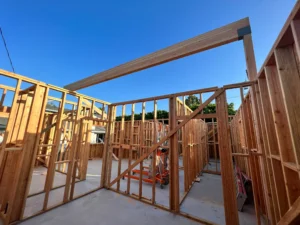
This is where your dream home truly begins to take shape. A typical custom home construction process includes:

  • Foundation and Framing: Laying the foundation and building the structural framework.

  • Roofing and Exterior: Installing roofing, windows, doors, and exterior finishes.

  • Rough-ins: Running electrical, plumbing, and HVAC systems behind the walls.

  • Insulation and Drywall: Sealing and finishing the structure’s interior envelope.

  • Interior Finishes: Adding cabinetry, flooring, paint, lighting, and fixtures.

  • Exterior Hardscaping: Driveways, patios, landscaping, and outdoor living areas.

Depending on size, complexity, and permitting factors, a custom home build in Huntington Beach typically takes 10 to 18 months from groundbreaking to move-in.

Step 7: Final Inspections and Walkthrough

Once construction is complete, final inspections ensure that every part of your home meets local codes and safety standards. Your builder will handle inspection scheduling and address any last-minute adjustments.

Before you receive the keys, you’ll do a final walkthrough with your builder to review finishes, verify that everything is complete, and discuss maintenance for your new home.

Step 8: Enjoying Your Custom Home

The last step is the best — moving into a home designed for your lifestyle and built to your exact specifications. Beyond aesthetics, custom homes offer unmatched functionality, energy efficiency, and long-term value. They’re tailored to how you live now and how you plan to live in the future.

A well-built custom home can also deliver exceptional resale value, especially in a desirable coastal market like Huntington Beach, where quality construction and timeless design command premium prices.

Why Choosing the Right Custom Home Builder Matters

The difference between a smooth, on-time project and a stressful, over-budget one often comes down to the builder you choose. A skilled custom home builder Huntington Beach residents trust will:

  • Navigate local zoning and coastal development regulations

  • Coordinate architects, engineers, and subcontractors

  • Provide accurate cost estimates and realistic timelines

  • Manage permitting, inspections, and compliance

  • Deliver high-quality craftsmanship that lasts for generations

At Greater Pacific Construction, we’ve helped countless homeowners in Huntington Beach and across Orange County design and build their dream homes from the ground up. From the first concept meeting to the final walkthrough, our team ensures a seamless, stress-free process — and a finished home you’ll love for decades to come.

Start Building Your Dream Home in Huntington Beach

Building a custom home is one of the most rewarding projects you’ll ever undertake — and with the right builder, the process can be exciting and enjoyable from start to finish. If you’re ready to bring your vision to life, partner with a custom home builder Huntington Beach homeowners trust.

Contact Greater Pacific Construction today to schedule a complimentary consultation. We’ll answer your questions, guide you through the planning and permitting process, and help you create a custom home perfectly tailored to your lifestyle.

Visit www.greaterpacificconstruction.com to learn more about our custom home building services. Call us at (949) 749-5250 — and let’s start designing the home you’ve always dreamed of.

Picture of Kevin Zabeti
Kevin Zabeti

Kevin Zabeti serves as the president of Greater Pacific Construction pursuing the professional values and attention to detail that exemplify the very best about the construction industry.

This privacy policy has been compiled to better serve those who are concerned with how their ‘Personally Identifiable Information’ (PII) is being used online. PII, as described in US privacy law and information security, is information that can be used on its own or with other information to identify, contact, or locate a single person, or to identify an individual in context. Please read our privacy policy carefully to get a clear understanding of how we collect, use, protect or otherwise handle your Personally Identifiable Information in accordance with our website.

WHAT PERSONAL INFORMATION DO WE COLLECT FROM THE PEOPLE THAT VISIT OUR BLOG, WEBSITE OR APP?

When ordering or registering on our site, as appropriate, you may be asked to enter your name, email address, phone number or other details to help you with your experience.

WHEN DO WE COLLECT INFORMATION?

We collect information from you when you respond to a survey, fill out a form or enter information on our site, provide us with feedback on our services or request a quote.

HOW DO WE USE YOUR INFORMATION?

We may use the information we collect from you when you register, make a purchase, sign up for our newsletter, respond to a survey or marketing communication, surf the website, or use certain other site features in the following ways:

• To improve our website in order to better serve you.
• To allow us to better service you in responding to your customer service requests.
• To follow up with them after correspondence (live chat, email or phone inquiries)

HOW DO WE PROTECT YOUR INFORMATION?

We do not use vulnerability scanning and/or scanning to PCI standards. We only provide articles and information. We never ask for credit card numbers. We use regular Malware Scanning.

Your personal information is contained behind secured networks and is only accessible by a limited number of persons who have special access rights to such systems, and are required to keep the information confidential. In addition, all sensitive/credit information you supply is encrypted via Secure Socket Layer (SSL) technology. We implement a variety of security measures when a user enters, submits, or accesses their information to maintain the safety of your personal information. All transactions are processed through a gateway provider and are not stored or processed on our servers.

DO WE USE ‘COOKIES’?

Yes. Cookies are small files that a site or its service provider transfers to your computer’s hard drive through your Web browser (if you allow) that enables the site’s or service provider’s systems to recognize your browser and capture and remember certain information. For instance, we use cookies to help us remember and process the items in your shopping cart. They are also used to help us understand your preferences based on previous or current site activity, which enables us to provide you with improved services. We also use cookies to help us compile aggregate data about site traffic and site interaction so that we can offer better site experiences and tools in the future.

We use cookies to compile aggregate data about site traffic and site interactions in order to offer better site experiences and tools in the future. We may also use trusted third-party services that track this information on our behalf.

You can choose to have your computer warn you each time a cookie is being sent, or you can choose to turn off all cookies. You do this through your browser settings. Since browser is a little different, look at your browser’s Help Menu to learn the correct way to modify your cookies.

If you turn cookies off, Some of the features that make your site experience more efficient may not function properly.It won’t affect the user’s experience that make your site experience more efficient and may not function properly.

THIRD-PARTY DISCLOSURE

We do not sell, trade, or otherwise transfer to outside parties your Personally Identifiable Information unless we provide users with advance notice. This does not include website hosting partners and other parties who assist us in operating our website, conducting our business, or serving our users, so long as those parties agree to keep this information confidential. We may also release information when it’s release is appropriate to comply with the law, enforce our site policies, or protect ours or others’ rights, property or safety. However, non-personally identifiable visitor information may be provided to other parties for marketing, advertising, or other uses.

THIRD-PARTY LINKS

Occasionally, at our discretion, we may include or offer third-party products or services on our website. These third-party sites have separate and independent privacy policies. We therefore have no responsibility or liability for the content and activities of these linked sites. Nonetheless, we seek to protect the integrity of our site and welcome any feedback about these sites.

GOOGLE

Google’s advertising requirements can be summed up by Google’s Advertising Principles. They are put in place to provide a positive experience for users. https://support.google.com/adwordspolicy/answer/1316548?hl=en

WE USE GOOGLE ANALYTICS ON OUR WEBSITE.

Google, as a third-party vendor, uses cookies to serve ads on our site. Google’s use of the DART cookie enables it to serve ads to our users based on previous visits to our site and other sites on the Internet. Users may opt-out of the use of the DART cookie by visiting the Google Ad and Content Network privacy policy.

WE HAVE IMPLEMENTED THE FOLLOWING:

• Demographics and Interests Reporting

We, along with third-party vendors such as Google use first-party cookies (such as the Google Analytics cookies) and third-party cookies (such as the DoubleClick cookie) or other third-party identifiers together to compile data regarding user interactions with ad impressions and other ad service functions as they relate to our website.

OPTING OUT

Users can set preferences for how Google advertises to you using the Google Ad Settings page. Alternatively, you can opt out by visiting the Network Advertising Initiative Opt Out page or by using the Google Analytics Opt Out Browser add on.

CALIFORNIA ONLINE PRIVACY PROTECTION ACT

CalOPPA is the first state law in the nation to require commercial websites and online services to post a privacy policy. The law’s reach stretches well beyond California to require any person or company in the United States (and conceivably the world) that operates websites collecting Personally Identifiable Information from California consumers to post a conspicuous privacy policy on its website stating exactly the information being collected and those individuals or companies with whom it is being shared. – See more at: http://consumercal.org/california-online-privacy-protection-act-caloppa/#sthash.0FdRbT51.dpuf

According to CalOPPA, we agree to the following:
Users can visit our site anonymously.
Once this privacy policy is created, we will add a link to it on our home page or as a minimum, on the first significant page after entering our website.
Our Privacy Policy link includes the word ‘Privacy’ and can easily be found on the page specified above.

YOU WILL BE NOTIFIED OF ANY PRIVACY POLICY CHANGES:

On our Privacy Policy Page and you can change your personal information by emailing us.

HOW DOES OUR SITE HANDLE DO NOT TRACK SIGNALS?

We honor Do Not Track signals and Do Not Track, plant cookies, or use advertising when a Do Not Track (DNT) browser mechanism is in place.

DOES OUR SITE ALLOW THIRD-PARTY BEHAVIORAL TRACKING?

It’s also important to note that we do not allow third-party behavioral tracking

COPPA (CHILDREN ONLINE PRIVACY PROTECTION ACT)

When it comes to the collection of personal information from children under the age of 13 years old, the Children’s Online Privacy Protection Act (COPPA) puts parents in control. The Federal Trade Commission, United States’ consumer protection agency, enforces the COPPA Rule, which spells out what operators of websites and online services must do to protect children’s privacy and safety online. We do not specifically market to children under the age of 13 years old.
We do not let third-parties, including ad networks or plug-ins collect PII from children under 13.

FAIR INFORMATION PRACTICES

The Fair Information Practices Principles form the backbone of privacy law in the United States and the concepts they include have played a significant role in the development of data protection laws around the globe. Understanding the Fair Information Practice Principles and how they should be implemented is critical to comply with the various privacy laws that protect personal information.

IN ORDER TO BE IN LINE WITH FAIR INFORMATION PRACTICES WE WILL TAKE THE FOLLOWING RESPONSIVE ACTION, SHOULD A DATA BREACH OCCUR, WE WILL NOTIFY YOU VIA EMAIL WITHIN 7 BUSINESS DAYS.

We also agree to the Individual Redress Principle which requires that individuals have the right to legally pursue enforceable rights against data collectors and processors who fail to adhere to the law. This principle requires not only that individuals have enforceable rights against data users, but also that individuals have recourse to courts or government agencies to investigate and/or prosecute non-compliance by data processors.

Commercial Services

Residential Services

Gallery

Blogs

Our Company